
We dread making predictions because it's impossible to know what's really going to happen but we understand why it's everyone's first question for us. We base our predictions on current market conditions and trends. We're the first to admit our predictions tend to be cautious and dull. We're not trying to make headlines but give you sound advice.
We feel it's important to compare condo prices vs detached home prices when reviewing the real estate market, here you go:
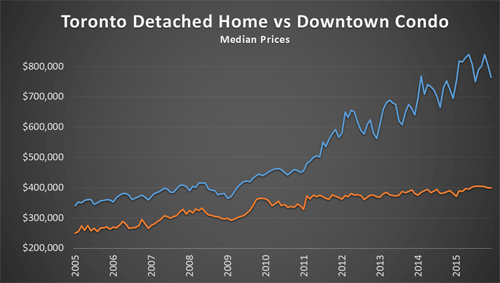
I'm never surprised to hear people talk about the 'condo bubble'. What they're really remarking about is the amount of new condos being built in Toronto which totals about 17,000 new suites per year for at least the past 6 years. That is a tremendous amount but there is also a tremendous demand. Prices have been slowing increasing at about 2% per year since 2011. There is no condo price bubble as you can see by the orange line in the above graph. Detached homes are another story. Since 2011, detached homes are up about 70% which is about 10% compounded annually. Detached home price stability is far more of a concern to me than condo price stability.
The downtown condo rental market has very low vacancy rates despite the high ratio of investor owned suites some new buildings have. There is genuine demand from people who want to rent or owner-occupy these 17,000 new suites per year. We don't have empty buildings as was seen in Miami during their boom/bust.
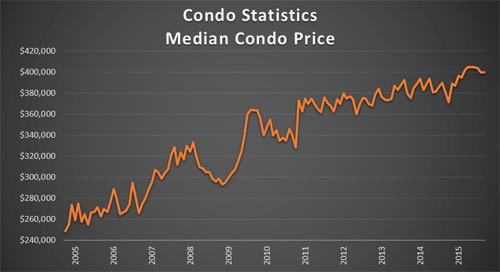
Condo prices ended the year at $400k, a strong finish to 2015.
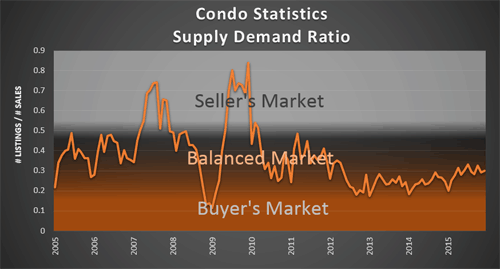
The suppy/demand has been incredibly steady resulting in a Balanced Market for 2015.
As for 2016, our dull and uneventful prediction as promised. Another year of low interest rates helping sustain current affordability. We don't think condo prices will move much this year in either direction. We think 2016 will be very similar to 2015. We don't believe even lower interest rates would put increased pressure on prices to rise. Fewer new construction projects would contribute to higher resale demand and higher prices but we don't expect that as the new supply is already guaranteed for the next 2 years. Investors will steadily increase equity as they pay their mortgages but will be cashflow neutral and won't see much appreciation. The poor start to the stock market will put the brakes on the US from raising their interest rates much further.
With national debts at extraordinary levels and only set to increase, most believe the only escape will be through significant inflation, perhaps beginning in 2017. If you believe inflation is coming, you may want to invest your cash in hard assets, such as real estate.
Having said all this, these are our opinions and you should listen to a broad spectrum before making your decisions. If you don't consider your home part of your portfolio, decisions tend to be much simpler. Right or wrong, reality is almost all of us consider our own homes the biggest part of our portfolio, food for thought.