

Imbalanced Market
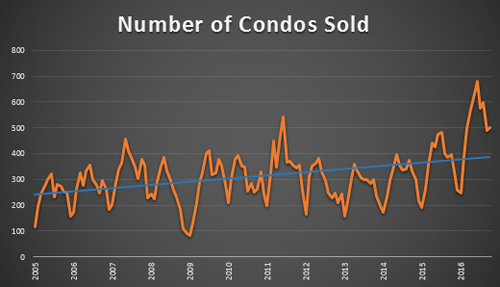
The imbalanced market that began in June is as skewed as ever. Let's look at what's happening right now. Typically in October, about 350 condos sell. This October 500 condos sold.
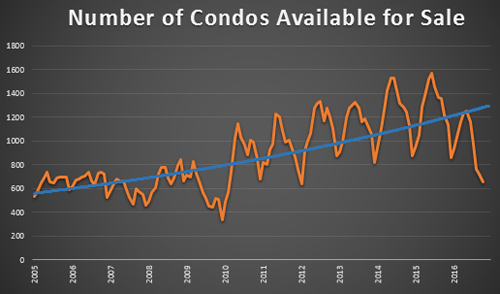
Most Octobers will have about 1200 suites for sale. This October we have 651 available for sale.
So we have strong demand and low supply. When we divide the above two statistics into each other, we get the supply/demand ratio which is the best representation of the overall market conditions.
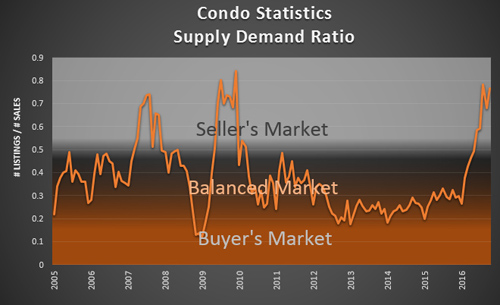
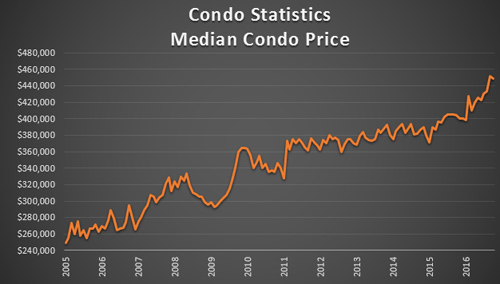
This explains why we're seeing such an increase in prices right now and it predicts higher prices to stay and likely higher prices to come.
Reporting the statistics is the easy part, explaining why this is happening is much more difficult. In our 24 years of combined real estate experience, we've had extremely few foreign buyers, probably around 1% of our business. Our clients are typically Canadian residents buying for their children, downsizing from a home, couples getting together and investors buying to rent. We see more and more investors buying a condo as an investment.
A lot of people are disappointed with their stock market investments and don't believe the 3-4% returns are acceptable considering inflation. Many investors would rather put down 20% on a condo, which means a 5:1 leverage, and find a good tenant. The tenant demand has always been strong and appreciation has been steady. It's well known that Toronto has always been an epicenter for immigration which has always contributed to the real estate demand. Our point is that we believe increased investor demand is what is most likely responsible for the recent spike in demand for condos. The spike in demand is resulting in higher prices.
There are many understandable objections to investing in today's market, the same objections that were valid 10 years ago. But the facts are that everyone who has bought a condo as an investment and held it with a long term strategy has done very well. With 'no end in sight' to low interest rates, the main risk going forward may be from increased lending restrictions from the banks or legislation. Just as rules have been imposed to calm the market, they can also be relaxed to support the market. That may include longer amortization periods, lower down payments on investment properties, relaxing the stress test qualifying or lower interest rates. It's in nobody's best interest to see a significant price correction and all sides want stable, steady, sustainable growth.